Showing posts with label Arctic. Show all posts

Tuesday, November 13, 2012

Scarce Strategic Mineral Alternative Sourcing Likely To Leave US Supply Chain At Risk Over Next 3-5 Years

Key Findings:
Due to lack of alternative strategic mineral sources, susceptibility to supply chain vulnerabilities likely to persist in next 3-5 years:

The biggest risk the US faces is likely supply chain vulnerabilities:
  • US imports 80 percent of all strategic minerals.
  • US imports 28.4 percent of strategic minerals from China.
  • Strategic minerals highly likely to remain essential for key industries, including defense, electronics and energy.
  • National mining likely presents opportunity to reduce import dependence.
  • One US company currently pursuing strategic mineral mining in the Arctic.
  • Legislation to quicken mine opening unlikely to pass Congress.

Arctic likely opportunity to reduce dependence:
  • US abuts Arctic region, allowing for undisputed access to resources.
  • US federal government issued call to explore Arctic region for strategic minerals.
  • China is likely to continue expanding its mining operations outside its mainland to include Africa and the Arctic.
  • Greenland, with growing access due to ice shelf melt, is likely an opportunity for domestic mining; however, little is being pursued presently.

Law enforcement highly likely most at risk:
  • Dependent on businesses and federal government for critical supplies, making its supply chain likely at high risk for potential disruptions.
  • State-by-state legislation likely impedes proactive, unified response to supply chain risk.
  • Metal theft likely to remain top strategic mineral priority for law enforcement.

About This Document:
The eleven students of the Collaborative Intelligence class assembled this document. Students researched and analyzed findings over the 2012 autumn term at Mercyhurst University. The class split into three teams with each team responsible for a specific topic. Four students were assigned to research national security issues, four were assigned to research business issues, and three students were assigned to research law enforcement issues. All three teams were tasked to answer the following question: “What are the likely US national security, business and law enforcement implications over the next 3-5 years of trends in critical or strategic minerals?” Teams collaborated to establish definitions and create a list of “critical strategic minerals.”
 
This report identifies the following as critical and strategic minerals for US national security, businesses, and law enforcement:
  • Antimony
  • Aragonite
  • Arsenic (trioxide)
  • Asbestos
  • Barite
  • Bismuth
  • Calcite
  • Cesium
  • Chalcocite
  • Chalcopyrite
  • Chromium
  • Cobalt
  • Copper
  • Gallium
  • Germanium
  • Gold
  • Indium
  • Iodine
  • Lithium
  • Magnesium metal
  • Manganese
  • Nickel
  • Niobium
  • Nitrogen (fixed),
  • ammonia
  • Peat
  • Perlite
  • Phosphate rock
  • Platinum-group metals
  • Potash
  • Quartz crystal
  • (industrial)
  • Rare earth elements
  • Rhenium
  • Rubidium
  • Scrap
  • Selenium
  • Strontium
  • Tantalum
  • Tellurium
  • Thallium
  • Thorium
  • Tungsten
  • Vanadium
Overall analytic confidence is moderate. All groups agreed on moderate analytic confidence for each set of group findings. Source reliability varied from medium to high, and sources could be successfully corroborated.


This book is a summary of a ten-week graduate class examining strategic mineral use and implications for US business, national security, and law enforcement. The project is the culmination of the research, along with the estimative findings, of the 11 second-year Intelligence Studies, Collaborative Intelligence (INTL 650) class in the Fall, 2012. It can be viewed and/or downloaded as a PDF from the link below. Scarce Strategic Mineral Alternatives Likely To Leave US Supply Chain At Risk Over Next 3-5 Years

Friday, October 5, 2012

US Far Behind in Race for Arctic Assets

The United States is not look at the Arctic as an investment
BARROW, ALASKA (GLOBALPOST) - The melting of the Arctic has opened up the potential to access oil and minerals beneath the floor of the Arctic Ocean.  Economists are predicting that there could be trillions of dollars in profit in the coming decades.  Alaska Lt. Governor Mead Treadwill believes the United States in not even in competition for the race for oil and minerals in the Arctic.   Despite the profits and opportunities in the Arctic, American administrators are not utilizing the Arctic's potential.  Many international observes believe the US is failing to understand the need and importance to establish itself as a leader in the Arctic.  It will take a long time for the United States to become as active as China and Russia in the Arctic.  The US Coast Guard does not have the resources for the shipping surge or oil exploration, including ice cutters.    Source: US Far Behind in Race for Arctic Assets (Reliability: Medium)

Comments:  The ice in the Arctic Ocean has shrank to an all-time low this year due to man-made global warming.  

Thursday, October 4, 2012

Arctic Region Rich In Resources, Lacking In Framework

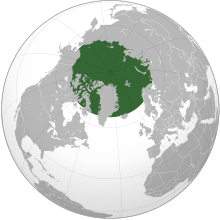
The arctic region.
MADRID (Eurasia Review)--Arctic ice has receded more over the past decade than at any other point in history, with summer ice melts making more areas accessible than ever before. The newly-accessible areas of the Arctic hold huge amounts of oil and gas as well as massive stock of high quality gold, diamond, plutonium and other rare earth minerals. A recent CSIS study found that although some Arctic countries (such as Russia) have claimed to support international cooperation in the Arctic, they have bolstered their military presence in the region. Since the region lacks any coherent framework to address international interests and concerns, it remains a potential flash point for all countries bordering the Arctic or with interests there. Source: Restructuring Arctic Stability And Global Security - Analysis (Reliability: Medium)

Comments: With even non-Arctic groups ranging from the EU to China expressing interest in exploiting Arctic resources, Arctic countries such as the US must act quickly if they are to protect their interests in strategic minerals, oil, gas, and even fishing.

Friday, September 21, 2012

China Pursuing Arctic Mineral Riches


NUUK, GREENLAND (New York Times)--Although China does not currently hold any Arctic territories, it is deploying its wealth and diplomatic clout to secure a foothold. The country sees its involvement as important so that it is not shut out of mineral and shipping decisions. The Arctic region has risen rapidly on the country's foreign policy agenda: this year alone diplomats have visited Denmark, Sweden, Iceland, and also Greenland, where Chinese companies are investing to create a mining industry. Retreating of Greenland's ice cap has made accessible deposits of many valuable minerals; so far there has been little exploitation of Arctic resources. Greenland's proximity to the US is also of concern to American officials, who have accordingly stepped up diplomatic efforts with Arctic countries. Source: China Joins Nations Seeking Treasure in Warming Arctic (Reliability: High)


Comment: If China is successful in establishing a significant presence in the Arctic region, the supply of critical minerals such as cobalt and rare earth minerals, over which China already holds considerable control, will almost certainly become more skewed in favor of the Chinese. Furthermore, in light of the recent flare-up of the Senkaku (Diaoyu) Islands dispute with Japan, China will highly likely double its efforts to gain Arctic territory, and its scramble for Arctic territory will likely be a source of diplomatic tensions among prominent nations.