Friday, October 5, 2012

US Far Behind in Race for Arctic Assets

The United States is not look at the Arctic as an investment
BARROW, ALASKA (GLOBALPOST) - The melting of the Arctic has opened up the potential to access oil and minerals beneath the floor of the Arctic Ocean.  Economists are predicting that there could be trillions of dollars in profit in the coming decades.  Alaska Lt. Governor Mead Treadwill believes the United States in not even in competition for the race for oil and minerals in the Arctic.   Despite the profits and opportunities in the Arctic, American administrators are not utilizing the Arctic's potential.  Many international observes believe the US is failing to understand the need and importance to establish itself as a leader in the Arctic.  It will take a long time for the United States to become as active as China and Russia in the Arctic.  The US Coast Guard does not have the resources for the shipping surge or oil exploration, including ice cutters.    Source: US Far Behind in Race for Arctic Assets (Reliability: Medium)

Comments:  The ice in the Arctic Ocean has shrank to an all-time low this year due to man-made global warming.  

South African Mine Strike Spreads To More Mines

As many as 75,000 miners are already on strike. This equates
to about 15 percent of South Africa's mining sector's total workforce.

JOHANNESBURG (REUTERS)- Since Wednesday the mine strike has spread to a new sector: iron ore and it has hit another gold firm. Kumba an industrial unit of the global miner Anglo American, said the mine strike at its giant Sishen Mine in the Northern Cape involved 300 employees. It was limited to one area in the open cast mine, leaving most of the facility unaffected. Kumba is one of the world's top 10 iron ore producers. It produced 41.3 million tonnes of ore in 2011. Kumba's share price dropped more than 4 percent.

The strike is also testing President Jacob Zuma's leadership. The president is under fire for failing to address and contain the workers' protests demanding wage increases. There are glaring wealth inequalities persisting in South Africa since the end of the apartheid in 1994. Source: South Africa Wildcat Strikes Spread To More Mines (Reliability: High)

Comment: The spreading of labor unrest has raised fears that the country could see a repeat of the stand-off with police at Lonmin's platinum mine in August that led to the shooting of 34 miners. It was South Africa's bloodiest security incident since the end of the apartheid in 1994.

Innovation Metals Finishes Plans For Critical Rare-Earth Element Separation Facility


Innovation Metal's Rare-Earth Element Separation Facility
QUEBEC (AZOM) --On 5 October 2012, Innovation Metals announced the completion by GENIVAR Inc. of a set of process flow diagrams ("PFDs") for the extraction and purification stages of IMC's future critical rare-earth element (REE) separation facility in Becancour, Quebec. Starting with a mixed REE carbonate feedstock, produced by blending individual feedstock received from various future REE producers, the process starts with an acid-leaching phase, to solubilize the REEs, followed by a cascade of separation stages based on solvent-extraction techniques. As a result, the process creates formation of thirteen distinct high-purity rare-earth chloride products.
Source: IMC Collaborates to Develop PFDs For Rare-Earth Element Separation Facility (Reliability: High)

Comment: According to Patrick Wong, CEO of IMC, IMC is now one of the only companies outside of China with detailed quantitative designs for a critical REE separation plant.

Further Delays In Lynas Plant Operation In Malaysia

Malaysian activists protest against a proposed rare earth plant
Protesters are afraid of radioactive waste
THE AUSTRALIAN (SYDNEY) - Lynas in Malaysia is facing further challenges as a Malaysian court has postponed  until 10 October 2012 a hearing on a temporary operating license granted to the Australian miner for a rare earths plant . This court rule further delays the start of operations at the USD800 million facility, which has been opposed by green activists and concerns about radiation. Lynas received the temporary operating license in early September 2012 but Kuantan High Court in eastern Pahang state, where the plant is located, put it on hold later that month after an appeal by protesters. The objective of activists and local residents is to shut down the plant - the biggest outside China - which has emerged as a controversial issue in the campaign for next year national elections. The plant will process material from Lynas' Mount Weld mine in Western Australia. Lynas claims that the plant is safe, and any radioactive waste it produces will only be low-level and not harmful to human health.  Source: Hearing On Lynas Malaysia Plant Postponed (Reliability: Medium)

Comment:  In spite of close relations to Malaysian ruling political parties, Lynas could not open it's processing plant
because of public protests. Widespread protests can endanger future rare earths processing plants all over the world.

Thursday, October 4, 2012

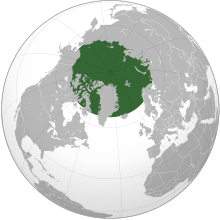
Arctic Region Rich In Resources, Lacking In Framework

The arctic region.
MADRID (Eurasia Review)--Arctic ice has receded more over the past decade than at any other point in history, with summer ice melts making more areas accessible than ever before. The newly-accessible areas of the Arctic hold huge amounts of oil and gas as well as massive stock of high quality gold, diamond, plutonium and other rare earth minerals. A recent CSIS study found that although some Arctic countries (such as Russia) have claimed to support international cooperation in the Arctic, they have bolstered their military presence in the region. Since the region lacks any coherent framework to address international interests and concerns, it remains a potential flash point for all countries bordering the Arctic or with interests there. Source: Restructuring Arctic Stability And Global Security - Analysis (Reliability: Medium)

Comments: With even non-Arctic groups ranging from the EU to China expressing interest in exploiting Arctic resources, Arctic countries such as the US must act quickly if they are to protect their interests in strategic minerals, oil, gas, and even fishing.

Doubt Cast on Afghan MIning

WASHINGTON (WSJ) -- Afghanistan hopes to transform its $1 trillion in mineral deposits into a reliable economic base. However, researchers working for the U.S. military concluded that the cost to build and run a rail network across Afghanistan could cost greater than $54 billion.

A spokesman for Afghanistan's Foreign Ministry questioned the cost estimate and predicted that in the end the benefits of a nationwide rail system would outweigh the costs.  Officials in Afghanistan hope to generate $300 million from mining projects by 2016.  Within 12 years, Afghans hope mining revenues will contribute to half of the country's GDP, yet no large-scale  mining projects are in operation.

U.S. Department of Defense strategists backed the Afghanistan government in selling its biggest mineral interests to Chinese, Indian, Canadian and U.S. companies, from whom it hopes to receive licensing fees and royalties. The U.S. first began to consider minerals as a possible economic boost for Afghanistan in 2010. But U.S researchers outlined hurdles that would be difficult to overcome. It would require up to 3,000 miles of track through 16,000-foot mountain ranges.

Western officials however said Afghanistan would be able to pursue other major projects that use trucks rather than rail.  Source: Doubt Cast on Afghan Mining (Reliability: High)

Comment: According to the USGS, in addition to billions of dollars worth of iron and copper, there is an estimated $25 billion of gold, $81 billion of niobium, and sizable quantities of cobalt, molybdenum, asbestos, silver and other industrial minerals in Afghanistan mines.  U.S business interested in Afghanistan mines would benefit from pursuing the feasibility of strategic mineral mining to lessen our dependency on China. 

Wednesday, October 3, 2012

Great Western Minerals Group To Conduct Yttrium Oxide Assessment for DoD

MICHIGAN (PROACTIVE INVESTORS) - The US Department of Defense announced on 1 October 2012 that it has chosen Great Western Minerals Group's (GWMG) rare earth processing subsidiary, Great Western Technologies of Troy, Michigan, to conduct a supply chain assessment for high purity yttrium oxide.
Yttrium Oxide (Y2O3)

Almost all high-purity yttria is currently produced in China. The DoD uses yttrium oxide in several defense applications such as polishing compounds for precision lasers and thermal barrier coatings for jet engines. The DoD has projected an annual shortfall of 93 short tons of elemental yttrium from domestic sources by 2013.

"We intend to advance previous Department of Defense research to uncover the extent to which the defense industrial base has the capacity to produce high-purity yttrium oxide to support critical defense programs," interim GWMG chief executive Robert Quinn said in a release. Source: Great Western Minerals to conduct yttrium oxide purification assessment for U.S. Department of Defense.
(Reliability: Moderate)

Comments: Since China produces nearly 95 percent of the world's rare earths, and since there are not effective substitutes for yttrium, finding domestic sources for mining and production is likely to become more important to national defense security. The use of yttrium as a component in phosphors and electronics is especially important to US economics and defense applications.